

Surprised by Faith
Part 2 of 6 · When Healing Doesn’t Come

New to the series? Start with Part 1: When We Question If Faith Is Enough.
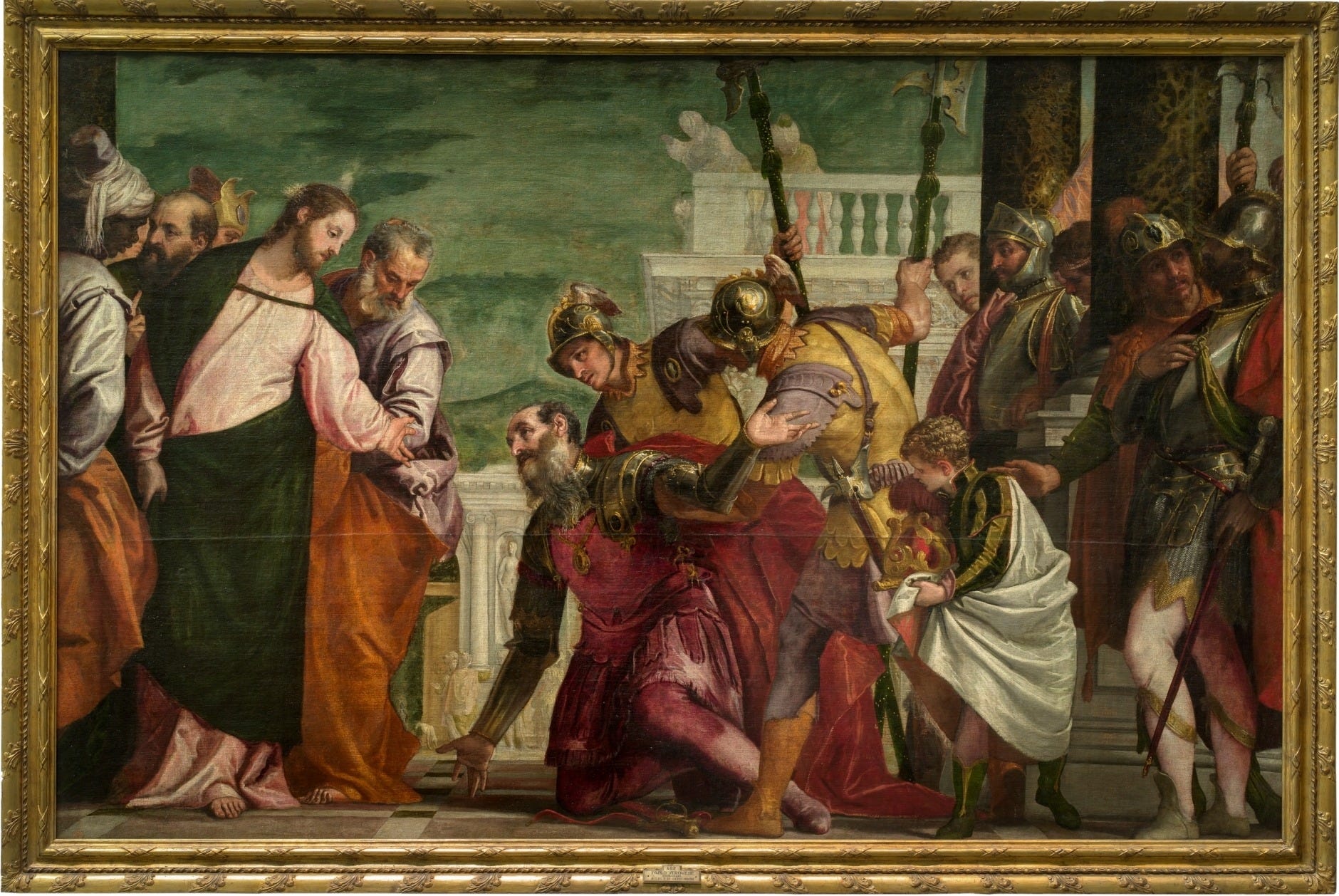
Our conversation on faith and healing continues by examining two stories in which Jesus is taken aback. This, in itself, should stop us in our tracks. He’s Jesus! How can Jesus be surprised? Yet two times, Jesus is amazed, and both involve faith and miracles.
Most of the time, the people who meet Jesus are in awe and wonder, and rightly so. The Greek verb thaumazō, meaning “to marvel” or “to be amazed,” shows up about thirty times in the Gospels. Crowds are amazed by his teaching; the disciples by his authority over the wind and sea. The Pharisees are silenced by his wisdom and turn away, amazed. Jesus almost always inspires wonder.
What we don’t expect is for Jesus to be amazed at anything, but here he is. Once in Capernaum, a Roman soldier asks him to heal a servant. And once in his own hometown, when his neighbors are offended because he’s getting too big for his britches. In the first, he marvels at the man’s faith. In the second, he marvels at their absence of it.
Both stories are worth slowing down on. Because a formula isn’t what they offer.
Capernaum (Matt 8:5–13; Lk 7:1–10)
A Roman centurion comes to Jesus with a problem. His servant is severely ill, and from the Greek word he uses, we know this is someone he cares for like family.1
He’s a Gentile and an officer of an occupying force. Devout Jews regarded such a man as ceremonially impure and a constant reminder of their political subjugation under Rome.2 This guy is the last person you would expect Jesus to praise.
On the flip side, it’s shocking that a Roman officer of his rank would bow before a Jewish rabbi to ask for help. But he’s desperate.
What the centurion says is striking. Jesus offers to come and heal the servant. But he waves him off. There’s no need to come. Just say the word, and my servant will be healed.
He reasons like a soldier. I’m a man under authority. I tell one man, “Go,” and he goes. I tell another, “Come,” and he comes. He’s reading Jesus like a chain of command. Simply speak the word, and it’s done.
Amazed, Jesus tells the crowd he hasn’t seen that kind of faith anywhere in Israel.
Then, he delivers the pivotal line: “Go. Let it be done just as you believed it would.” At that very moment, the servant is healed.
Nazareth (Matt 13:54–58; Mk 6:1–6)
The second scene takes place in Jesus’s childhood village. By the time he arrives, his reputation has already spread. Mark details at least ten incredible miracles in the preceding chapters, and the local crowd knows all about them.
He arrives with his disciples, goes to the synagogue on the Sabbath, and begins teaching. Initially, the crowd is amazed. However, the word here isn’t thaumazō. Instead, it’s ekplēssō, a verb that implies being so overwhelmed you lose footing.3 Their amazement sours almost immediately.
Where did this man get all this? Isn’t he just a carpenter, the son of Mary?
These aren’t strangers. They’re people who watched him grow up. People who, as Daniel Akin puts it, “changed His diapers, who learned the Torah and enjoyed table fellowship with Him, and who at one time gave Him hugs and kisses.” Not anymore.4
Then the mic drop: He could not do any miracles there, except lay his hands on a few sick people and heal them. And then: He was amazed at their lack of faith.
Laid side by side, the two stories above present a tidy formula. If you impress Jesus with faith, you get a miracle. No faith, no miracle.
Very few of our settings put it that explicitly. But the implicit version is everywhere.
It lives in the phrases we use, the questions we ask, and what is left unsaid when healing doesn’t come.
A careful second look at both encounters tells a very different story.
Capernaum, reread
Watch the sequence in Matthew’s account. The centurion makes a simple statement of fact: “Lord, my young servant lies in bed, paralyzed and in terrible pain” (Matt 8:6 NLT). Now, look closely at Jesus’s answer: “I will come and heal him” (Matt 8:7 NLT).5
Before the centurion says a word about authority. Before the famous “just say the word” speech. Before any display of faith.
Jesus offers to heal.
Jesus initiates, independent of the centurion’s faith. Whatever Jesus is about to marvel at, it isn’t a faith that triggered the healing.
So, what is it?
Look at what the centurion actually says. He refers to Jesus as “Lord” twice (Matt 8:6, 8). He also mentions, “I am not worthy that you should come under my roof.” His initial words, ouk eimi hikanos, meaning “I am not worthy,” are identical to what John the Baptist says about Jesus a few chapters earlier: “After me comes one who is more powerful than I, whose sandals I am not worthy to carry” (Matt 3:11 NIV).6 The centurion places himself under Jesus in the same way a soldier submits to a commanding officer. I am not worthy, my Lord.
He’s naming Jesus’s authority not as a kind of power but as one of identity.
As Grant Osborne reads this scene, what moves Jesus is “not just this man’s faith in his miraculous power. It is saving faith, faith in Jesus himself as God’s Messiah and the clear repentance that underlies it, that so overwhelms him.”7
That’s the marvel. Not faith in the outcome, but faith in the person.
Nazareth, reread
Here’s the part nobody wants to say out loud: Nazareth believed in the miracles. That’s exactly the problem.
Mark says it plainly: they heard about the wisdom of his teaching and the miracles he had done, and they didn’t deny them (Mk 6:2; Matt 13:54). They concede his wisdom. They acknowledge the miracles. They simply refuse who he is.
“Isn’t this the carpenter? The son of Mary?” Look how they ask it. In first-century Judaism, you named a man by his father. Using “son of Mary” in his own hometown, where everyone knew Joseph, was to reach for scandal.8 You remember. Mary’s boy. She was already showing when she came back from her cousin’s. I heard Joseph almost called it off.
Point to the scandal, and you can dismiss the person standing before you.
They knew Jesus too well to see him as anything other than the kid down the street. Accepting him as something more is to admit mistaking him for thirty years. David McKenna describes the tragedy: “The townspeople of Nazareth ask the right questions with the wrong attitude.”9 Or as Akin puts it, “They knew Him but could not explain Him, so they rejected Him.”10
Their unbelief wasn’t about miracles. It was about identity.
Craig Keener puts it bluntly. To heal without faith directed toward the person of Jesus is “to act like the pagan magicians of antiquity.” God can heal sovereignly. But the goal is relationship. Not impressing people.11
This is what Jesus is marveling at in Nazareth: not lack of faith in his power, but their rejection of his person.
Their unbelief wasn’t about miracles. It was about identity.
This matters because Mark 6 has been used to make a very different argument. The argument goes like this. If a community lacks faith for miracles, miracles will not happen. Jennifer Anne Cox, working from inside Pentecostal scholarship, calls this an “inappropriate use” of the passage.12
Refuse who he is, and you treat him as someone who has to be convinced. Someone distant, who shows up only if we believe hard enough. That isn’t faith in Jesus. It’s the Nazareth refusal wearing a new face.
Faith in a person, not for an outcome
What separates Capernaum from Nazareth isn’t the amount of faith in the room. It’s the object of that faith. The centurion correctly identifies Jesus as having divine authority. He calls him Lord. He says he’s not worthy. The Nazareth crowd misidentifies Jesus as nothing more than a village commoner born of scandal. We misidentify him, too, just in our own way.
Across the Gospels, the people Jesus heals name him. The Canaanite woman calls him Lord, Son of David (Matt 15:21–28). Bartimaeus calls him Son of David (Mk 10:46–52). The paralytic and his friends call him Lord (Lk 5:17–26). The ten lepers call him Master (Lk 17:11–19).13
They aren’t working up faith for an outcome. They’re addressing a person, by name, by title, by identity.
The faith Jesus commends, again and again, is faith in him. Not faith for him to do something.
What this changes
Once again, I want to be careful. The proper response to illness or any urgent situation is to call on Jesus. He welcomes us. Nothing above disputes the reality of healing or the importance of praying with expectation. Jesus heals in these accounts, and he commends faith.
My point, however, is more specific and, I believe, more crucial. The faith Jesus praises isn’t about possessing a deep inner feeling that enacts a miracle. To be blunt, that is faith in faith, not faith in Jesus.
This is the difference between trying to muster enough faith for healing and trusting in Jesus. The first is a project we can’t finish. The second is a posture we can hold even when healing has not come, might not come, or did not come for the one we loved.
Ironically, this freedom produces more faith than our previous attempts ever could. Faith aimed at outcomes collapses when the outcome doesn’t come. Faith aimed at Jesus himself only grows because Jesus is still and always will be Jesus.
Faith aimed at outcomes collapses when the outcome doesn’t come. Faith aimed at Jesus himself only grows because Jesus is still and always will be Jesus.
So, when we run to him, we can rest knowing it isn’t the measure of our faith that does anything. It’s his love, his care for our situation, and the record of countless miracles by his hand that bring peace and confidence that everything is going to be okay. There is both healing available and grace to remain if not. Either way, we’re safe.
But before we can talk about faith fully (which we’ll get to in part 5), we have to talk about healing differently. The Gospel writers meant something larger and stranger by the word than the modern Western imagination is prepared for. What they meant will be explored next week.
See you then.
The Greek word for “servant” is pais, which can mean both “child” and “servant.” Roman centurions weren’t allowed to marry during their service, so their households typically included servants and freedmen who became part of the family. The marriage prohibition was a feature of Roman military discipline well into the second century, though unofficial households were widely tolerated.
Luke softens this by telling us the centurion had been good to the Jewish community, even funding the construction of a synagogue, and that the local elders advocated for him on those grounds (Lk 7:4–5). Matthew leaves the politics in.
The verb ekplēssō literally means “to be struck out of one’s senses,” “to be astounded.” It occurs thirteen times in the New Testament, often in contexts where the amazement is tinged with confusion, offense, or unease. English translations consistently render it with a heavier word than the “marveled” used for thaumazō (“astonished” in NASB; “astounded” in NRSV). The Nazareth crowd isn’t in the same kind of wonder as the crowds in Capernaum.
Daniel L. Akin, Exalting Jesus in Mark, Christ-Centered Exposition Commentary (Nashville: Holman Reference, 2014), on Mark 6. Akin’s fuller sentence: “Jesus’ teachings and miracles do not automatically produce faith. They actually offended those who changed His diapers, who learned the Torah and enjoyed table fellowship with Him, and who at one time gave Him hugs and kisses. Not anymore. All that has changed.”
The Greek (ἐγὼ ἐλθὼν θεραπεύσω αὐτόν, with an emphatic ἐγὼ) is rendered as a question in the NIV and CSB (“Shall I come and heal him?”) and as a statement in the ESV, NRSV, and KJV (“I will come and heal him”). The point doesn’t depend on which translation you prefer. In either reading, Jesus’s response to the request comes before the centurion’s speech about authority. The centurion’s faith follows Jesus’s offer rather than triggering it.
The phrase ouk eimi hikanos (“I am not worthy”) is identical to John the Baptist’s confession of Jesus in Matt 3:11. Craig Blomberg notes that the centurion also emphatically positions “my” in his Greek address, “my Lord,” underscoring personal recognition of Jesus’s authority. See Blomberg, Matthew, on Matt 8:5–13.
Grant R. Osborne, Matthew, on Matt 8:10. Osborne goes on: “This man becomes a model for the new Israel Christ is establishing.”
James R. Edwards reads the phrase as “clearly questionable, probably disrespectful, and may even insinuate illegitimacy.” Calling a grown man by his mother’s name in his own hometown was abnormal in first-century Judaism. Edwards notes the harder reading, that “son of Mary” was tantamount to “bastard,” is probably overstated, but the insinuation is unmistakable. Edwards, The Gospel according to Mark, 172.
David L. McKenna, Mark, on Mark 6:1–6. The line lands hard because it names the problem precisely. The Nazareth crowd isn’t asking bad questions, they’re asking the right ones from a refused posture.
Akin, Exalting Jesus in Mark, on Mark 6.
Craig S. Keener, The IVP Bible Background Commentary: New Testament, on Mark 6:1–6. Also: “God can act sovereignly, the goal is relationship, not merely impressing people.”
Jennifer Anne Cox, drawing on Keith Warrington, argues that Mark 6 is “inappropriately used to justify the belief that lack of faith prevents Christians ministering healing or exercising gifts of healing.” Cox reads the passage instead as Jesus’s decision to withhold further miracles in response to the people’s rejection of his identity and mission. See Cox, “A Re-Examination of Faith and Healing in the Gospels,” Cyberjournal for Pentecostal-Charismatic Research 24 (2017), http://www.pctii.org/cyberj/cyberj24/cox.html.
The pattern of Christological address by those receiving healing is wider than these examples. Others include the blind and mute man whose healing prompts the crowd to ask whether Jesus is “the Son of David” (Matthew 12:22–23); the woman with the issue of blood, whose interior confession of trust precedes her healing (Mark 5:25–34); and the father who confesses, “I believe; help my unbelief!” (Mark 9:24). The consistent thread is that the faith Jesus commends is never aimed at a desired outcome. It is aimed at his own person, named correctly.
So good.
Wow … loving this Pastor Dan.